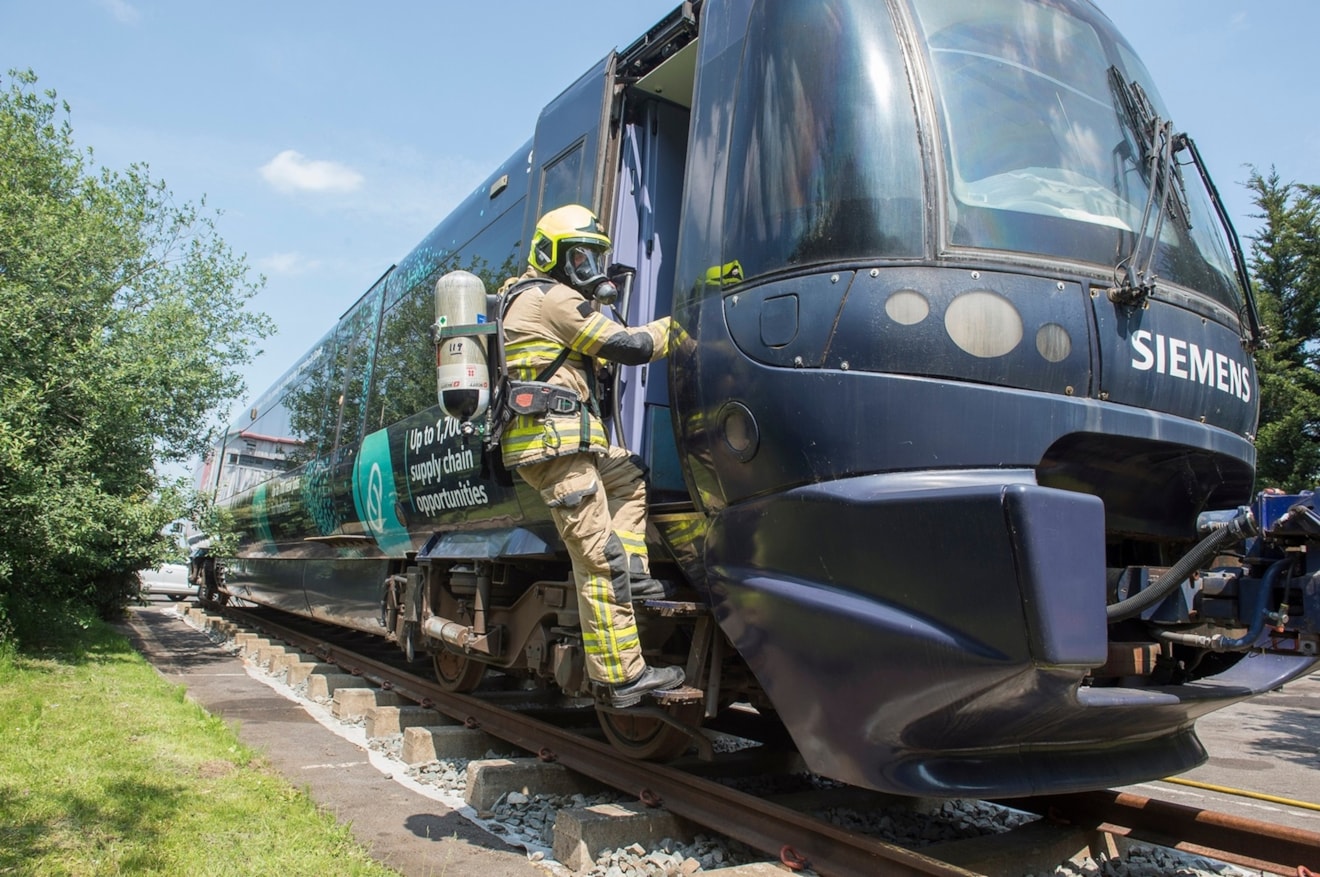
Former Heathrow Express carriage donated for emergency services training
A former train whisking passengers between Paddington and Heathrow has been donated by Siemen’s for emergency services training.
A total of fourteen trains operating the service were withdrawn in 2022 at a relatively young age and replaced with newer stock.
The Class 332 were built in Spain between 1998 and 2000 with a short life of around 20 years – half the expected normal lifespan for electric trains.
The arrival of Elizabeth line services has hit passenger numbers on Heathrow Express owing to cheaper fares and direct trains across London rather than having to change at Paddington.

Humberside Fire and Rescue Service now have one carriage for “enhancing their training capabilities for major incidents and civil emergencies”.
David Harris, Siemens Mobility Construction Project Manager, said:
“We’re delighted to have teamed up with Humberside Fire and Rescue service on this project. It’s not a simple task to move a 23m-long train carriage, so we’ve worked collaboratively with the fire service to make it possible.
“After identifying a suitable location within the training centre site, we supported the installation of sleepers, rails and ballast, before liaising with a haulage company to arrange transportation and siting of the carriage, around the fire service’s busy training schedule.
“It’s fantastic to know the carriage will also be used by young people. Siemens is committed to supporting young people into work, and we’re involved with numerous apprenticeship and education programmes, so this aligns with our values.”
Phil Shillito, Chief Fire Officer, Humberside Fire and Rescue Service, said:
“We are incredibly grateful to Siemens Mobility for this generous donation. The addition of a real train carriage at our training site is a rare and valuable asset. It will significantly enhance the realism of our training scenarios and better prepare our firefighters for emergencies involving rail transport.
“This is not something that’s often available to fire and rescue services, and it will make a real difference in our ability to protect the communities we serve.”


