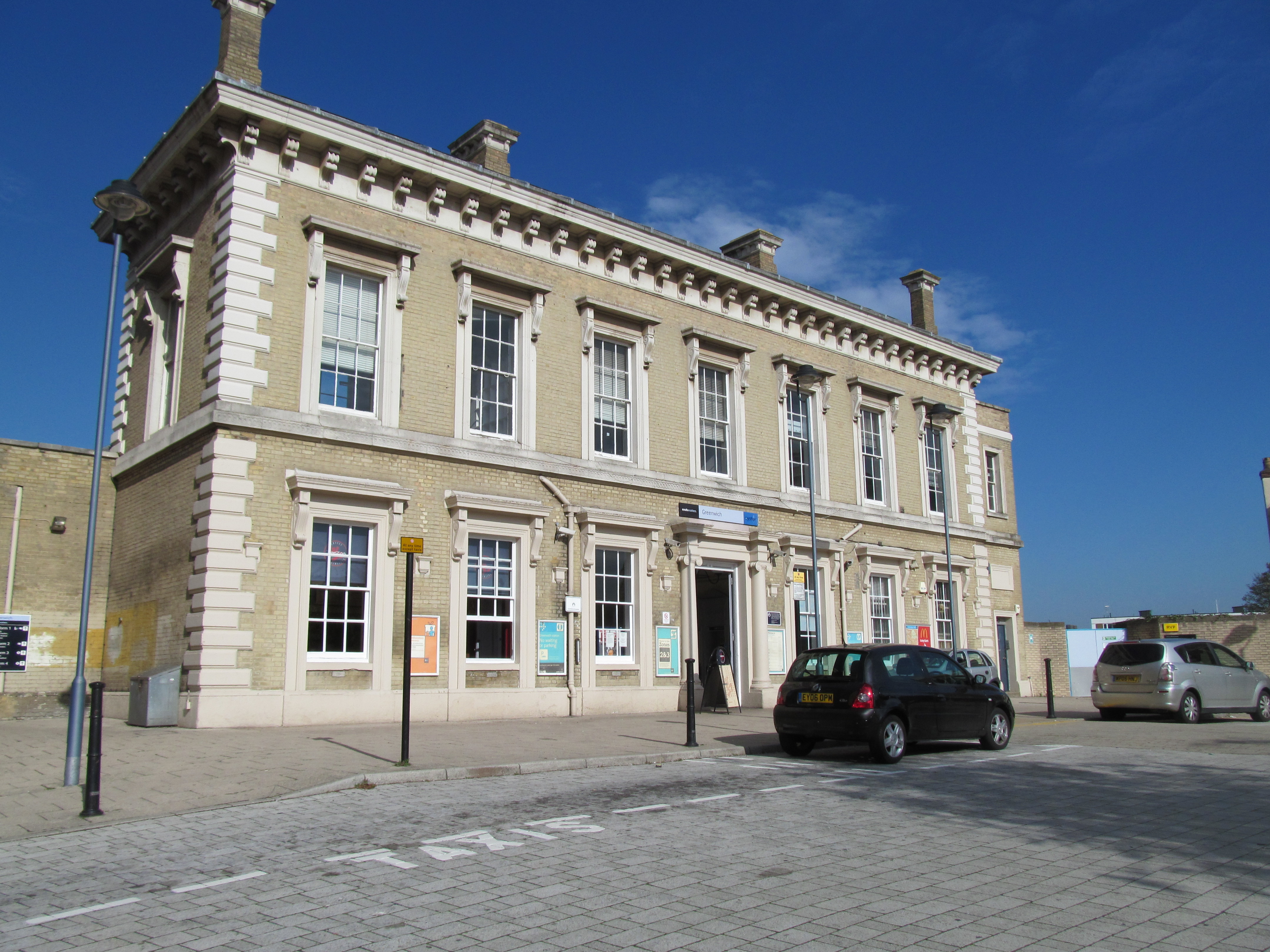
Greenwich station improvement work underway
Work has begun to improve and renovate parts of Grade II listed Greenwich railway station.
It was announced last year that funds would be available for improvement works at a number of stations across the Southeastern network, with detailed plans for Greenwich subsequently submitted.

Work includes new platform canopy roofs and replacement of tired timber daggerboards, which are timber boards around the edge of railway canopies”.
The Greenwich Society saw funds awarded to remove “excess signage, adding comfortable seating, incorporating a local history information board, and displaying artwork from local schools and colleges”.
The station dates from 1840 and since 1999 has served both the DLR and Southeastern.
Passenger numbers using the station are set to rise with the imminent closure of Cutty Sark DLR station for up to a year. That’s set to begin from late May. Cutty Sark saw 7.76 million passenger journeys in 2023 so if even half move to Greenwich that’s quite the increase.
The station will also set to see a short term boost in Southeastern Metro services from next month with the closure of the Blackheath rail tunnel for ten weeks, briefly boosting service levels back to those seen before cuts in 2022.
New homes rise in the area with one block named Saxon Wharf visible from platforms.

Blackheath station
Another station currently seeing improvement works is Blackheath, though of a more wide-ranging nature with the Blackheath Society heavily involved.
Blackheath is seeing a heritage green colour scheme applied to station fittings with the station buildings also set to see similar.

As in Greenwich, canopy daggerboards are being replaced with like-for-like alternatives.
Another potential change at the wider station site is new housing on the station car park.
The welcome arrival of handsome heritage green ensures the number of colour schemes and branding across local lines widens further.
Southeastern’s current blue and purple branding widely visible alongside remnants of Connect which still lives on (Maze Hill shows the old yellows popping up beneath peeling paint) with even some Network SouthEast red making the odd appearance on the network.
Which all begs the question, what happens when Great British railways takes over?


I miss the old glass house at Maze Hill. In amongst all the traditional wooden buildings along the line, Maze Hill was a completely clear glass block, with only the thinnest of black frameworks. Evenings, it was lit up internally with reddish-orange lamps. In the original setting it was quite striking.