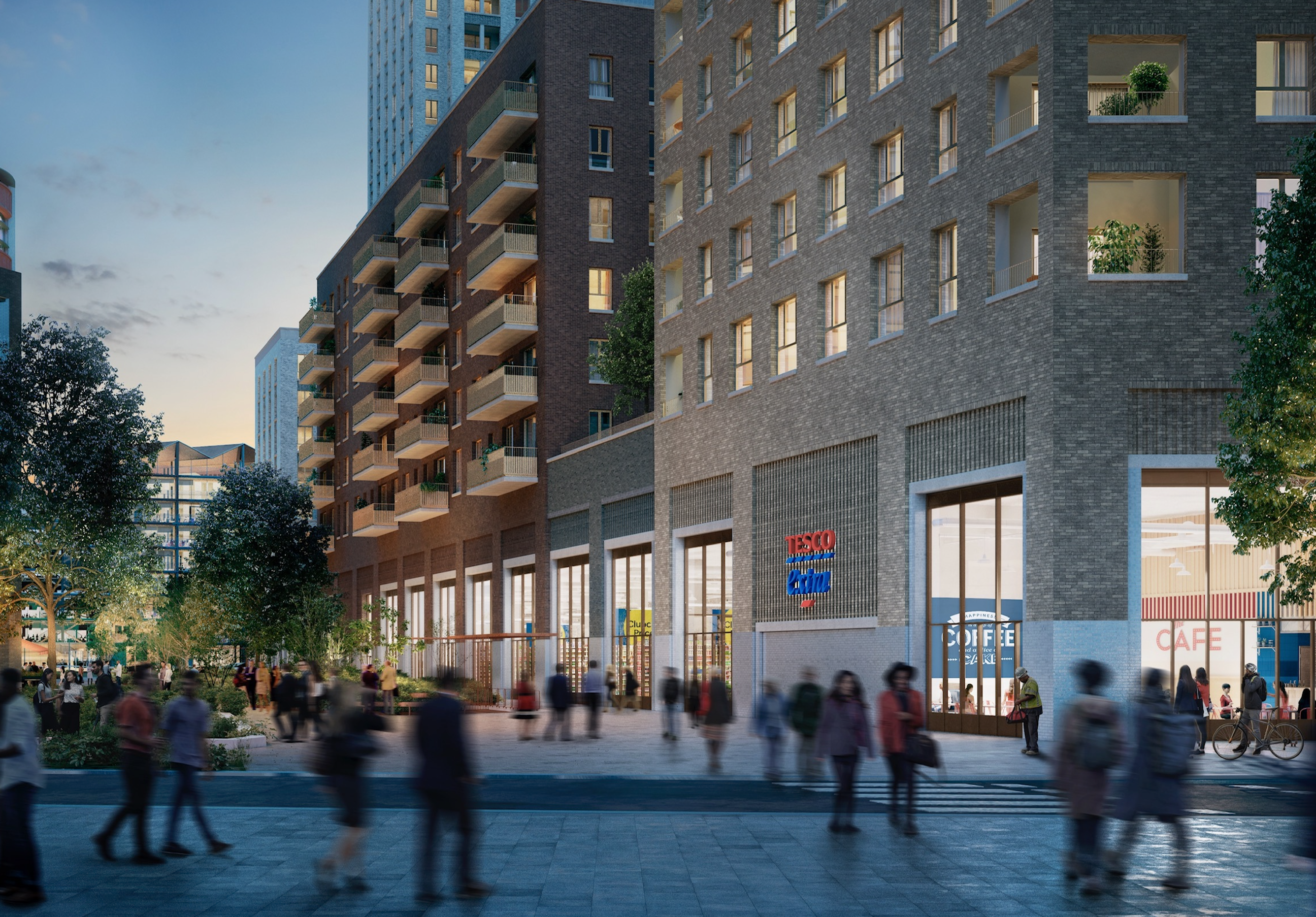
Next stage of Surrey Quays redevelopment put on hold
The next phase of a major development in Rotherhithe has been put on hold just weeks after a new entrance at Surrey Quays station opened to serve the site.
British Land has halted plans for phase two which would have seen Tesco move to a new site at phase two located both below and beside new homes, in turn permitting work to progress on the shopping centre.
Plans have recently been approved to reduce “affordable” housing on site and increase overall homes, but that’s not been enough to halt progress. British Land and AustralianSuper were given the green light to reduce affordable housing to nine per cent in March this year.

Various blocks are to gain additional floors as part of the revised masterplan. That was approved by City Hall with grant funding.
Phase two
Phase two of the masterplan was to see new builds on the former Odeon cinema and bowling alley.
They shut in September 2024 with jobs lost, the site demolished and now it looks like being vacant for some years to come.

Poor sales of homes on other parts of the site hasn’t helped. Average prices are extremely high across London relative to average wages, vast service charges and leasehold costs have a rotten reputation while reform is bogged down.
Prices for flats are stagnant in places and dropping in many others. Buying one right now at the asking price is asking for a loss. So few sell.
Construction costs have also risen substantially and right now the entire housing sector is in a complete mess.
Transport
Transport improvements in advance of building have been undertaken, with the aforementioned expansion of Surrey Quays station with a new entrance opening in recent weeks.
London Overground’s Windrush line is also set to see service improvements with 18 trains operating in each direction per hour from a current 16 tph.
British Land state pausing phase two – which was set to start in 2027 – doesn’t mean the entire plan is abandoned, though it is yet another severe blow to housebuilding in London.


One thing that is often overlooked is how substantially S106 and CIL payments have increased. CIL was meant to replace S106 but in practice it is layered on top. On top of other fees and administration costs layered on by Quangos demanding mitigations, these add approximately £100,000 in cost to every new dwelling that needs to be passed on. In practice the CIL and S106 are being used to plug gaps in under-funded local authorities. You can therefore make the leap that houses aren’t being built due to the strains of social care on councils.
I think it is sometimes too easy to blame ‘greedy’ developers for not building enough houses but when you load social housing provisions on top of CIL and S106 and all the bureaucracy from Natural England etc, there is zero incentive to bring new developments forward. This is before factoring in the soft flat market. Unless we fix this element, we aren’t going to see sustained increases private developer led starts.