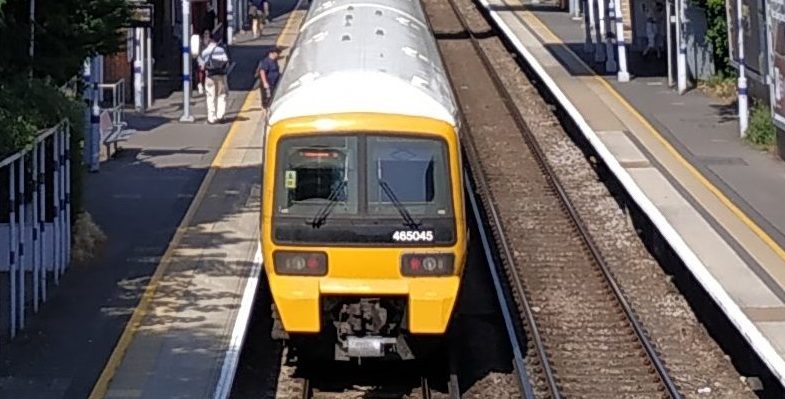
Southeastern trains move towards scrap as relocated to new sidings over Xmas
Over Christmas a couple of Southeastern’s metro stock moved to sidings near Cambridge as the scrapyard appears increasingly likely.
Class 465 Network trains moved from warm storage at Worksop to a site near Cambridge at Ely having left south east London earlier in the year as stock arrived from South Western Railway.

Ely sidings has a number of old stock destined for scrap including TfL’s Class 315 now displaced by Class 345 Crossrail stock. Networkers moved into storage are owned by Angel Trains who leased to Southeastern. It’s a common misconception that franchises owned trains. In reality they lease stock.
With 30 new Class 707s arriving having been rendered surplus at South Western Railway via a new train order upon a franchise change, the 707s ended up at Southeastern which saw some of Southeastern’s 1990s stock initially head to Worksop for store as future plans decided.
Old trains out
Southeastern lack siding capacity for a net gain in stock and so it appears a policy of one in, one out. There are 16 Class 465/2s now in storage (all the 465/2 sub class never saw retractioning in the late 2000s). The likelihood of them ever returning to service was always extremely unlikely, and their recent move from warm storage to apparent cold storage appears to confirm the scrapyard likely beckons.
With Southeastern due to see 150 Class 707 carriages in total, it just so happens that all the Class 465/2s and their smaller 466 sister trains total 150 carriages.

However removing a mixture of four-car and two-car trains for fixed 5-car trains may well provide less flexibility in future, and of course fixed five-car trains doesn’t utilise a Metro network that would be able to run 12-car trains with selective door opening.
The Class 707 introduction still leaves 80 per cent of the Networker fleet operating, and with the trains now at 30 years old the next question is when a full fleet replacement is initiated.
Networkers took about five years from order to implementation in the late 1980s and early 1990s. Given heavy cuts expected for rail in coming years, could we see another five years before an order is placed bringing their lifespan up to 40 years?
If so, a substantial internal refurbishment for another decade wouldn’t go amiss. They’ve become ever more tired as nearly a decade of short term extensions saw little investment beyond legal requirements. Given the number of Networkers set to remain still vastly outnumbers trains arriving from South Western Railway, they aren’t all going anytime soon.


