New homes, new shops & rail potential squandered: Southeastern stations in London
Covering new developments across south east London and north Kent on this site takes me to various towns across the area, and almost always by train.
These visits show up a few issues that become ever more emergent over time, and today’s post focuses on how much potential rail passenger growth and revenue is being lost by a penny wiese, pound foolish attitude from government who hold the pursestrings.
As stated, when covering thousands of new homes or new commercial attractions and offices on an almost daily basis one thing is always pretty clear: Southeastern stations are barely staffed in areas of major growth and not paying remains a doddle.

Go to almost any station and there’s few to no staff. Gates and barriers? Don’t be silly.
And an on-board check is a myth.
Not only does the free-for-all nature of the network reduce funding but it also means passenger numbers remain an unknown, which hinders service provision.
They may have some idea through manual counts but unless things of changed, most Networkers lack passenger counters and they remain the bulk of the Metro fleet.
I’ll list some recent examples below. I could offer more but we’d be here all day. Here’s a few towns visited in the past week or two.
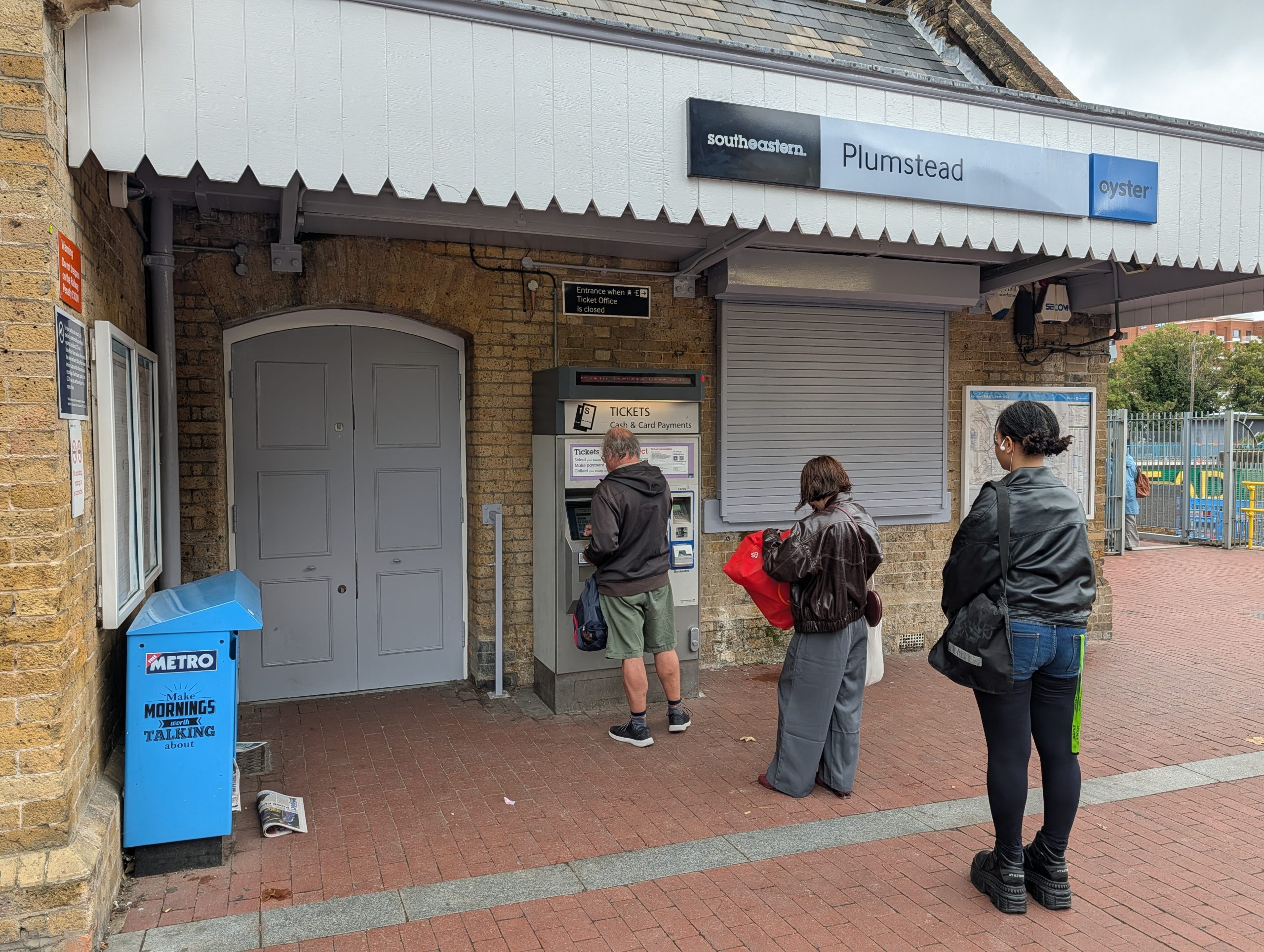
Plumstead
The first few blocks of a near 2,000-home development are now complete near Plumstead station.
I’ve taken the train to the area a few times to take photos for posts on this site of not just new homes but public realm changes leading to the station. And what have I seen regularly? Either the ticket office shut or the entire station building shut.

There’s no ticket gates and often no staff at all during the day. Not such an issue at midday but no staff presence at night could well put some off travelling.
Put it this way, I’ve travelled it for years and am wary. Someone moving in and trying it may run a mile.
It’s such a contrast to many TfL stations and other areas of London and beyond when it comes to National Rail stations.
Woolwich Arsenal
This is the only station with a regular and visible staff presence but even then it’s a ghost town after around 8pm, even on busy weekends.
I say busy weekend but it’s notable how quiet it becomes compared to the Elizabeth line station which is well lit and staffed into the evenings.

Thousands of homes are rising mere metres away.
The chances it remains a forgotton backwater in the evenings when they’re all occupied?
Woolwich Dockyard
A far quieter station but one that has a fair few new homes underway nearby. MAjor estate rebuilds are now becoming occupied nearby.
Staff? Never seen on any visit.

Charlton
Same story. Few staff and no gates.
Paying seems optional. Meanwhile 8,000 homes are aplnned nearby, hundreds are underway and a 5,000-capacity venue was recently approved nearby.

Amusingly opposition from Southeastern and the Met centred around no staff at the station. Well, maybe change that?
Greenwich
This past week I’ve covered the Saxon Wharf development nearby now completing and work starting on a 27-storey tower.
Scaffolding also surrounds the former town hall whilst conversion to residential usage is underway.

Staffing? Not much evident.
Maybe one poor feller trying to advise tourists and keep the platforms clean.

Greenwich and Woolwich offer a stark contrast with TfL modes of transport – and many other Natioanal Rail areas I use elsewhere.
Use the DLR? Someone customer-facing is always on board. Elizabeth line? Every station is well-staffed.
National Rail in south east London with Southeastern and Thameslink? Zero custoner-facing staff on trains and almost every station sees minimal staffing. What’s that doing to encourage travel?
It’s fine for me; a bloke in a hoody. Not encouraging many though is it? In fact I often only wear a hoody due to hassle on the line over the years.
Deptford
And then Deptford.
Buzzing now and the town is busier than ever. Yet the station? Nicely rebuilt but no staff seen.

I could go on and on. Some examples ar emore egregious than others. Kidbrooke is a great example. Ever more homes and yet the station staffing is woeful.
Many towns seeing 6,000+ new homes get major upgrades. Kidbrooke gained a small new station building but it’s often closed. No apparent change in staffing.

The Kent-bound entranc eis still a gap in the fence despite new developments from TfL and Greenwich Council.
Berkeley Homes are now looking to bump up total homes yet further as covered in recent weeks.
Control
Issues around barely staffed stations across the Southeastern network in London goes back many years. It existed under the Conservatives and Go-Ahead control, then continued when nationalised in 2021.
Nothing changed when Labour took power in 2024.

The wider Southeastern network is goldmine waiting to be tapped but that opportunitiy is long squandered.
Staff it as other Metro network are staffed, offer a safe and comfortable experience and many people moving to thousands of new homes would use it.
Don’t do that and they won’t.
This is evident at so many stations be from Brixton to Lower Sydenham and Crayford. The thought that everyone is heading to central London is also misplaced.
Ever more towns are destinations in their own right, as Deptford shows.

The omens for investment under this government aren’t good though, as the DfT under a Labour government in direct control of Thameslink have yet again enforced a service cut later this month.
If they’re cutting service there’s seemingly little chance they’ll provide funding to make stations and trains safer and more appealing to use, and in turn that will push away a lot of potential custom.
As I said, penny wise and pound foolish.
