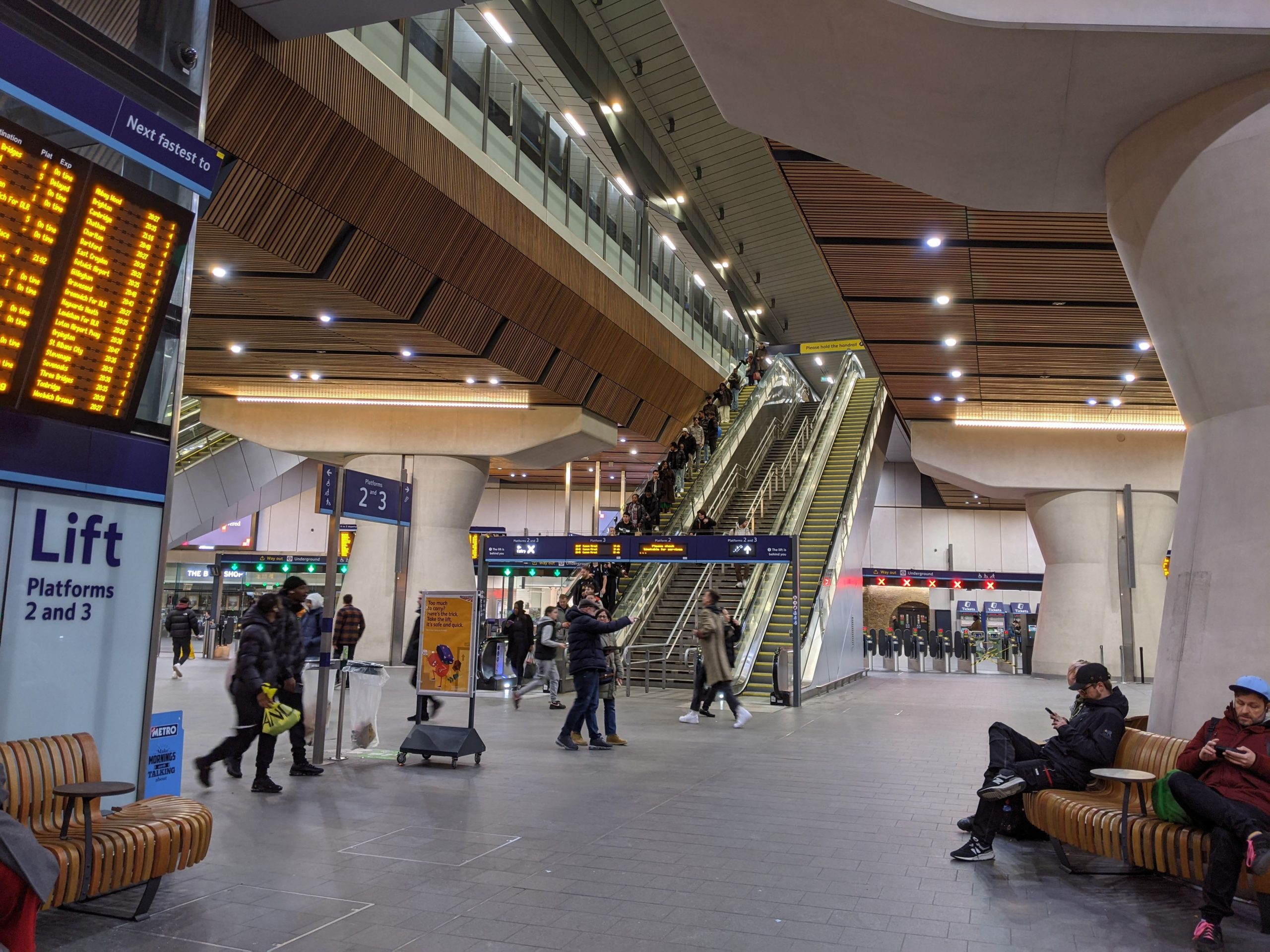
Latest gimmick? All railway stations to display train performance numbers from today
From today all railway stations in England will be have to display performance stats for public viewing.
The Department for Transport have forced the measure claiming “For the first time, you can see how reliable train services are at your local station, as railway performance data goes live at over 1700 stations across England from today.”
But hang on you may think, the first time? Surely not. And you’d be correct for thinking that as similar performance data was on display for years in many places. I recall seeing it at Southeastern stations twenty years ago.
Ah, but now it will be displayed digitally instead of on a poster. The innovation positively flies off the page (well, screen).
More gimmicks?
It’s hard to see this as anymore than a gimmick from the Department for Transport particularly when they say “We’re committed to holding train operators to account as we bring rail services into public ownership.”
Hang on, isn’t this the same Department for Transport which already run some rail companies such as Southeastern and dictate pretty much everything else for others.
That 4.6 per cent fare increase seen this week? That was from the Department for Transport. Government may wish for the public to think it’s managers at Greater Anglia, for example, or any other company that decided that but nope.
It’s government that holds the purse strings which dictates which train runs, what services were cut, what services can be reinstated, staffing levels and just about everything else. See how government-owned Southeastern regularly state they cannot afford to reinstate removed services unless government agree to fund.
Infrastructure
Trains that are late due to a bottleneck on the network where government won’t fund improvements? Quick, divert blame to the railway company who have no control over that. Look over there. Don’t blame us.
Services cut leading to busier trains and knock-on delays? Not us, guv. It’s those Train Operating Companies.
Lack of services as rail fleets forced to be scrapped by Whitehall diktat which leads to ongoing issues in some areas of the network? Whose fault is that?
Of course this isn’t to absolve every rail company and poor decision but the rail system we have at the moment is more micro-managed from Whitehall and the Department for Transport than any time for decades. British Rail had more operational independence without constant interference from Westminster civil servants (who often have little clue of the industry).
We only have to see their short-termism when they enforced cuts on, for example, Southeastern Metro leading to long service intervals in areas of housing growth leading to a slow rebound from covid. TfL didn’t cut in nearby areas and passenger numbers and revenue bounced back far quicker.
In DfT civil service land it’s often a case of cut services so they’re unappealing, passenger numbers reduce or stagnate and so of course there’s no desire or funding to reinstate services. All while pushing fare increases higher than inflation.
This latest measure has more than a strong whiff of rehashing past measures wrapped in a new bow while hoping punters won’t look at who really pulls the strings – and causes many of the issues.


The entire framing of this announcement today has been an exercise in government portraying problems as out of their control rather than many being a direct result of their own action and policy. See the Hendy and Alexander quotes and all this about “naming and shaming” and “accountability”. If that was the case they’d be honest that many issues come from DfT HQ in Whitehall. It’s an attempt to keep feeding the narrative about privatisation and shareholders and fat cats even though fare rises are decided by Whitehall and all fare revenue from passengers now heads straight to the Treasury without going to any private company first. Nothing happens without DaFT say so.
Politicians with power over rail don’t want that spotlight on them but the advent of GBR offers a problem. They can’t then blame for example Southeastern and others even though they’re directly controlled by the Department for Transport. We can expect GBR to be the fall guy even if mandarins still keep a tight leash and dictate all areas of control but that’s a trickier proposition to pull off.
TL;DR: Govt run the system now and most issues are Westminster and government directly or indirectly.
A complete gimmick and a big waste of money and resources. Another screen shitting in my eyes while I wait for a train? No, thank you.
One wonders if it’s a ruse to get yet more advertising in stations and whether or not the performance data will be interspersed with ads.
Regardless, these will no doubt get vandalised in quick succession.
Make a journey slower decreases risk of delays. Airlines do it for ages and are always on time 🙁
Train services which have a much shorter duration should not do the same. Artificially slows the service down. My service seems to be 1 min slower every year, but punctuality has increased. What a joke